EU–Western Balkans Civil Society High-Level Conference: Trust and Partnership at the Heart of EU Enlargement
Announcements, Press materials
Date 1 June 2026

The EU–Western Balkans Civil Society High-Level Conference in Vienna gathered over 110 participants to strengthen trust, civic engagement, and public support for EU enlargement. Open Society Foundations – Western Balkans (OSF-WB) co-organized the conference, where Regional Director Andi Dobrushi argued that civil society should be counted as a democratic partner in shaping enlargement policy, not only a consulted voice.
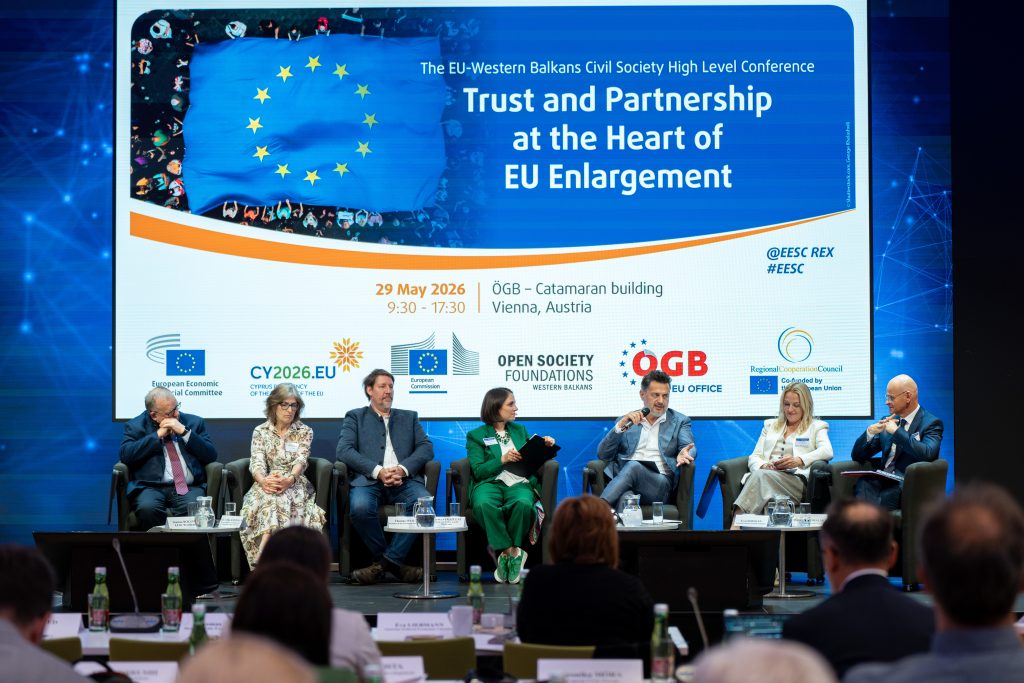
The European Economic and Social Committee (EESC) convened the conference on 29 May 2026 in Vienna, under the auspices of the Cyprus Presidency of the Council of the European Union. It brought together civil society representatives, EU institutions, policymakers, and stakeholders from the Western Balkans and EU Member States, and took place ahead of the EU–Western Balkans Summit.
The conference was organized in cooperation with the European Commission, Open Society Foundations – Western Balkans (OSF-WB), and the Regional Cooperation Council (RCC), providing a platform for dialogue between governments, social partners, and civil society actors from across the region and the European Union.
Discussions focused on the role of civil society in advancing EU enlargement, strengthening democratic resilience, countering disinformation, and improving communication on enlargement. Participants also addressed civil society’s contribution to the EU Growth Plan for the Western Balkans and the future Multiannual Financial Framework (MFF), underlining the importance of sustained reform momentum and socio-economic convergence.
Opening the conference, Séamus Boland, President of the EESC, emphasized: “EU enlargement is a geopolitical imperative for a stronger, more secure and more prosperous Europe, but we can’t take the support of citizens in the EU or the Western Balkans for granted. Civil society must be at the heart of this process, building bridges between the EU and the Western Balkans and helping deliver the reforms and prosperity that enlargement can bring.”
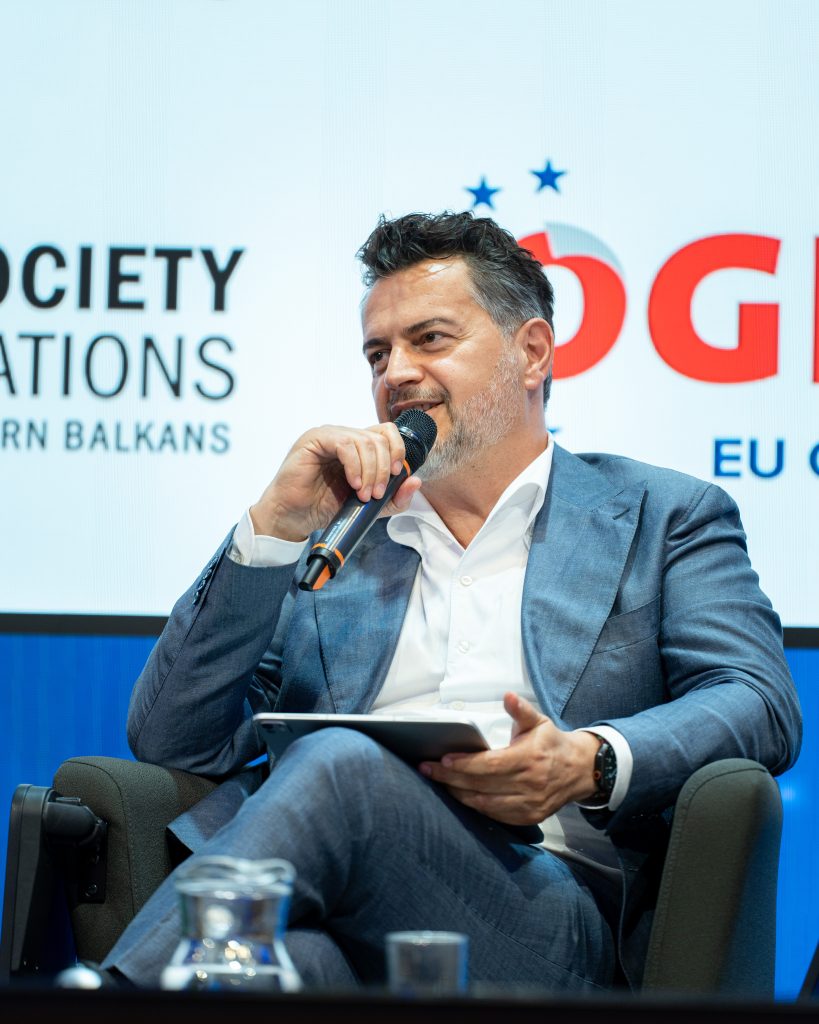
From the perspective of civil society engagement, our Regional Director Andi Dobrushi stressed:“As our experience in the region shows, the issue is not that civil society lacks evidence or expertise; our evidence is already in the room. The real gap is that we are often not. That is the difference between being consulted and being counted as a democratic partner in shaping enlargement policy.”
Thomas Waitz, Member of the European Parliament, noted: “Civil society is one of the most crucial pillars of the EU enlargement process and an important partner for me as a politician. Civil society must be firmly embedded in the reform process through a genuine and inclusive exchange and trusted to hold politics accountable.”
Participants also emphasized the importance of social dialogue, inclusive governance, and regional cooperation in ensuring that enlargement delivers real benefits to citizens. In this context, Wolfgang Katzian, President of the Austrian Trade Union Federation, highlighted: “Successful Western Balkans enlargement requires more than economic integration. Without strong trade unions, robust social dialogue and proper funding, the EU risks creating more social dumping instead of shared prosperity.”
Building on these discussions, the conference conclusions underlined that EU enlargement must remain a credible, merit-based process anchored in strict rule of law and democratic standards, and reaffirmed the essential role of organized civil society as a partner in accession and reform processes. They also highlighted the need for stronger strategic communication on enlargement and coordinated action to counter disinformation.
Participants stressed the need for adequate, predictable, and transparent support for civil society within future EU funding frameworks, including the next Multiannual Financial Framework (MFF). The conclusions emphasized that enlargement-related funding should uphold democratic standards, the rule of law, and fundamental rights, and support sustainable socio-economic convergence in the Western Balkans. They also called for stronger involvement of organized civil society in the implementation of reforms and EU support instruments, ensuring that financial assistance effectively contributes to a credible, merit-based enlargement process.
The EU–Western Balkans Civil Society High-Level Conference concluded with the adoption of these recommendations, to be addressed to EU institutions and national authorities, reinforcing the contribution of organized civil society to a credible, inclusive, and forward-looking enlargement process.
Full video of the conference here | Programme | Conclusions (PDF).
Background
The EU–Western Balkans Civil Society High-Level Conference is part of the EESC’s broader engagement with enlargement countries, providing a platform for structured dialogue between civil society organizations, EU institutions, and national stakeholders. The conference contributes to strengthening civic participation, promoting democratic reforms, and supporting socio-economic convergence as part of the EU enlargement agenda.
Related News On This Thematic Area

Civil Society & Think Tank Forum 2026 preparations kick off ahead of the main event in October
The first preparatory meeting bringing together organizers and partners contributing to the Civil Society and Think Tank Forum 2026...

The Theory of Change: What Method Can Bring the Western Balkans into the EU?
InCLUDE Podcast · Episode 1 · 7 April 2026 The Istituto Affari Internazionali (IAI) in Rome introduced InCLUDE, a...

Echoes of Democracy Political School Launches in Skopje, Shaping the Region’s European Future
The first module of the Echoes of Democracy Political School convened regional and international experts, policymakers, and researchers in...

