Solidarity in Images: ‘Ukraine: Love+War’ Exhibition in Belgrade Highlights Human Resilience
Press materials
Date 15 November 2024


The exhibition “UKRAINE: LOVE + WAR (2014-2024)” was officially opened in the European House in Belgrade, in presence of about 140 guests on 15 November 2024. The opening was attended by representatives of the Government, cultural institutions, the Ukrainian community in Serbia, the international community, civil society, as well as numerous media.
The exhibition was inspired by the book of the same name published by the FotoEvidence, association from France. The book, which visitors could also see and go through at the opening of the exhibition, is testimony of the devastating impact of Russian aggression on Ukrainian society, but also of the fact that not even the horrors of war can stop and defeat life and love. While the book brings us 240 photographs recorded in the period 2014-2024 through the lens of 95 recognized international photojournalists, the exhibition presented 50 selected photographs.
Miodrag Milosavljević, deputy director of the Open Society Foundations – Western Balkans, greeted the present public and pointed out that the opening of the exhibition was the culmination of several events held in previous days in Belgrade with the idea of expressing solidarity with the people of Ukraine. The fact that the exhibition was organized in November carries additional symbolism, because it was opened to meet the thousandth day of the war in Ukraine.
Milosavljević reminded that the Open Society Foundations was among the first foundations that supported Ukraine since 1991, when it became an independent country and when the nascent Ukrainian democracy needed support. “Today, in this exhibition that shows dozens of photographs that bear witness to the war drama and destruction in Ukraine, the previous efforts may seem irrelevant in the current context. However, I believe that they are extremely important because thanks to them, Ukrainian society today continues to build resistance and considers democracy the cornerstone of its existence,” said Milosavljević.
“Next Thursday will be the thousandth day of the war. It’s a thousand days of death and suffering of our loved ones, our parents and children,” said Ambassador of Ukraine to the Republic of Serbia Volodymyr Tolkach, adding that apart from the war at the front, Ukrainian society is also fighting an “information war” with the aim of gaining the understanding of the whole world, including the Serbian public, to which this exhibition contributes.
Stana Božović, State Secretary in the Ministry of Human and Minority Rights and Social Dialogue in the Government of the Republic of Serbia, said that the photographs displayed at the exhibition are “extremely powerful, heavy and strong, and that they send a global message that is stronger than any declaration, appeal , strategy or law.” “In addition to documenting the events of the war, photographs also convey the deeper truth that no personal fate is insignificant,” said Božović.
“Today’s exhibition serves as a chronicle of love and suffering. It is a powerful reminder of why it is important to continue to support Ukraine and fight for freedom and democracy. Together we pay tribute to the resilience of the Ukrainian people and reaffirm our commitment to a peaceful and united Europe,” said Crtomir Peter Fisinger, head of the political department of the European delegation in Serbia, who reminded the audience of the various types of aid that the European Union provides to Ukraine.
According to Svetlana Bachevanova, executive director of FotoEvidence and curator of the exhibition, the love stories in the book “Ukraine: Love+war (2014-2024)” represent bright spots in the darkest times. “They talk about the cost of war in a universal language. These stories help us understand what many Ukrainians risk losing on a personal level every day,” Bachevanova said.
Evgeny Maloletka, a Ukrainian photographer, journalist and filmmaker, said that he is aware that “many Serbs still remember what the war looked like and that they know the feelings that Ukrainians feel today.” “This exhibition is a testimony of three years of war crimes, which will end one day, but these photographs will remain as witnesses of that time forever,” added Maloletka.
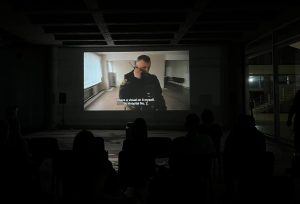
In the days leading up to the exhibition, the citizens had the opportunity to attend the screening of the film “Twenty Days in Mariupol”, which won the Oscar for the best documentary film in 2024, as well as a lively panel discussion about engaged art in times of crisis and the book “Ukraine: Love+ War (2014-2024)”. Panel was held at the Krokodil Association, a cultural center that has been intensively working with Ukrainian artists since the beginning of the war in Ukraine and encourages debate in Serbia about consequences of this war.
The exhibition “Ukraine: Love+War (2014-2024)” was opened to visitors until November 23, and group curatorial tours were organized daily.
The entire program was supported and organized by the Open Society Foundations – Western Balkans, in cooperation with FotoEvidence and Heartefact, as executive producer.
The photos are signed by Djordje Jovanovic and Dragana Udovicic


Related News On This Thematic Area

Civil Society & Think Tank Forum 2026 Concludes in Prishtina with Policy Recommendations for the Berlin Process Leaders’ Summit
The Civil Society & Think Tank Forum (CSF) 2026, the Berlin Process’s official civil society platform, concluded in Prishtina...

Civil Society & Think Tank Forum 2026 preparations kick off ahead of the main event in October
The first preparatory meeting bringing together organizers and partners contributing to the Civil Society and Think Tank Forum 2026...

EU–Western Balkans Civil Society High-Level Conference: Trust and Partnership at the Heart of EU Enlargement
The EU–Western Balkans Civil Society High-Level Conference in Vienna gathered over 110 participants to strengthen trust, civic engagement, and...